
Rug Collection
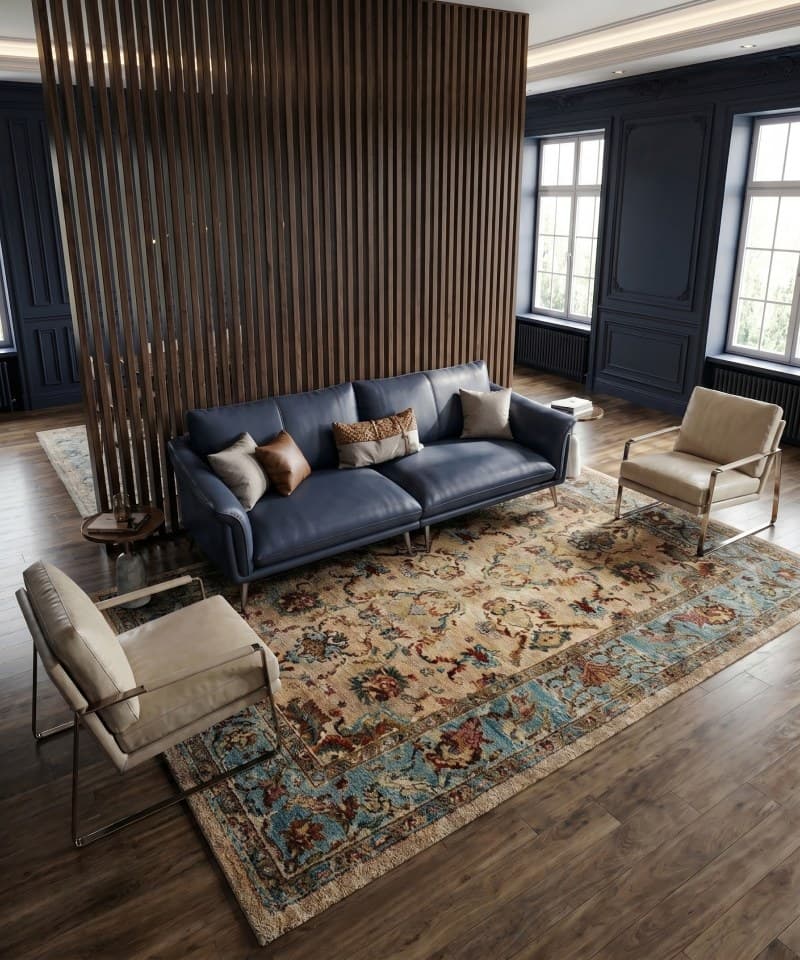
The Art of the Handwoven Rug
A hand-knotted rug is built knot by knot on the loom, and a single square metre can hold several hundred thousand of them. The weaver’s hand stays visible in the small irregularities no machine reproduces — and that is what gives an older rug its depth of colour and its slight, living asymmetry.
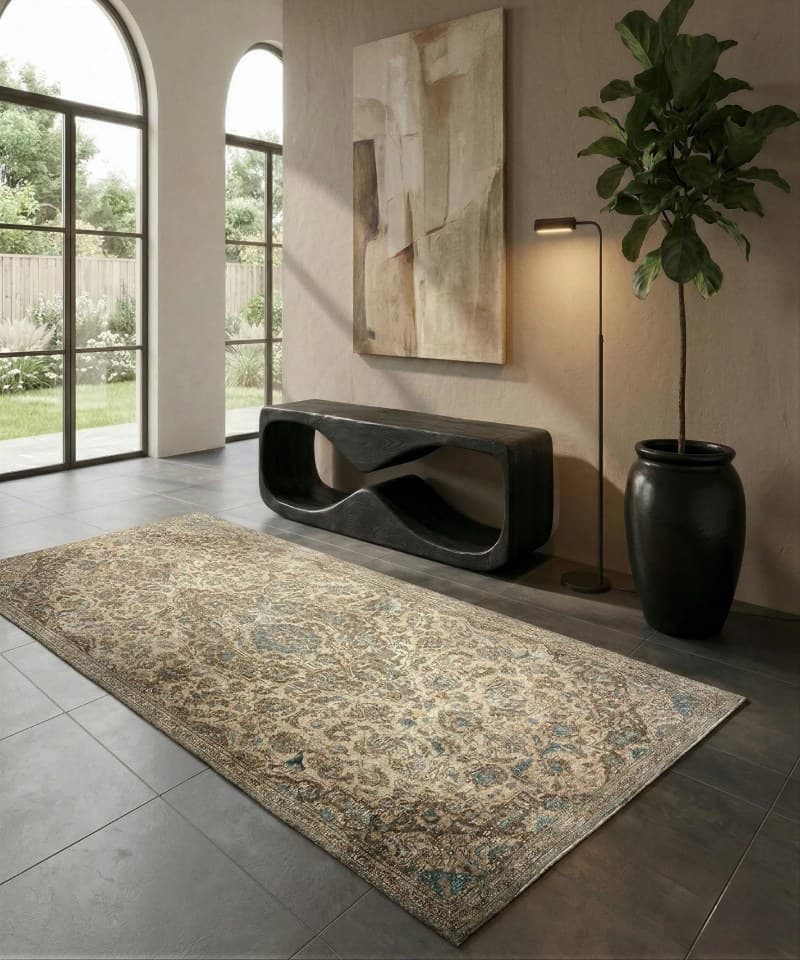
Reading a Persian Pattern
Most Persian designs belong to one of a few families. A central medallion organises the field around a single point; a garden layout divides it into beds; an all-over repeat carries one motif from edge to edge with no centre at all. The layout decides how a rug behaves in a room as much as its colour does.
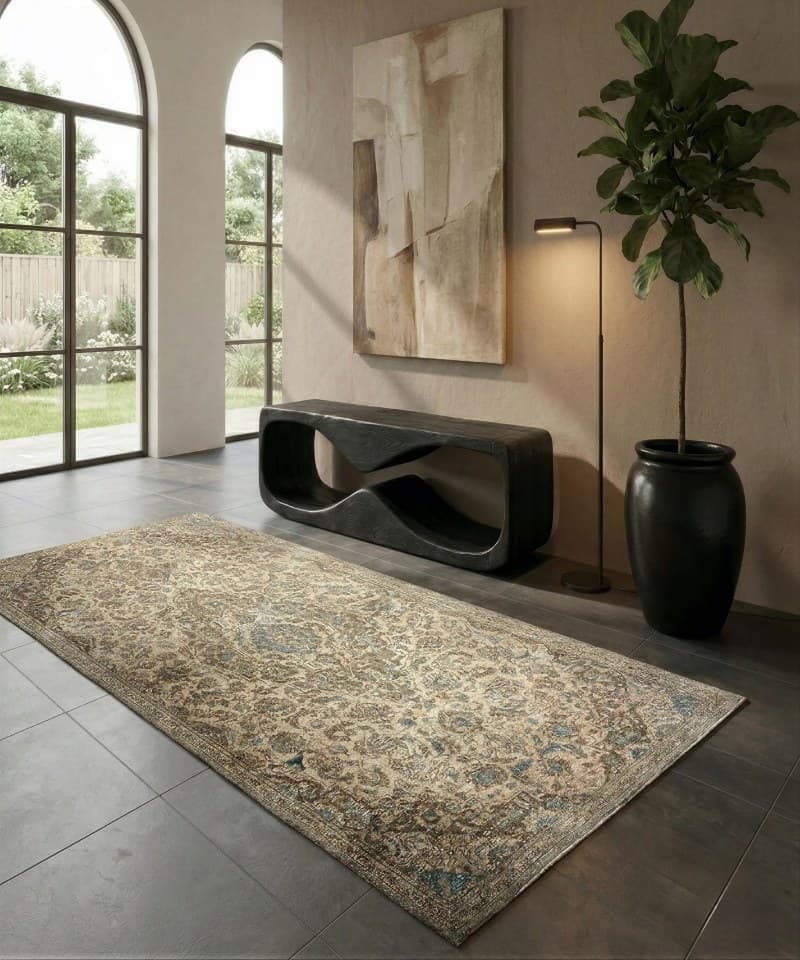
Wool, Silk and the Feel Underfoot
Highland wool is springy and forgiving, and it takes dye in a way that deepens rather than flattens with age. Silk is finer: it catches the light from one direction and goes quiet from another, so it is usually kept for detail. Many rugs use both, and the contrast between them is part of the design.
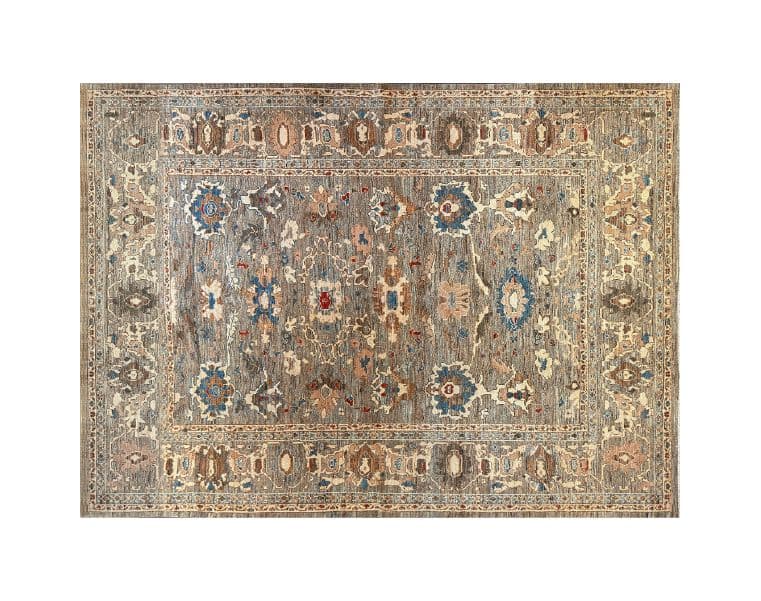
Choosing a Size for the Room
Measure the area rather than the furniture, and mark it out on the floor before ordering. In a living room the front legs of the sofa should sit on the rug at minimum; in a dining room it should reach far enough that chairs stay on it when they are pulled out.